Key Strategies for Efficient and Safe Naval Maintenance
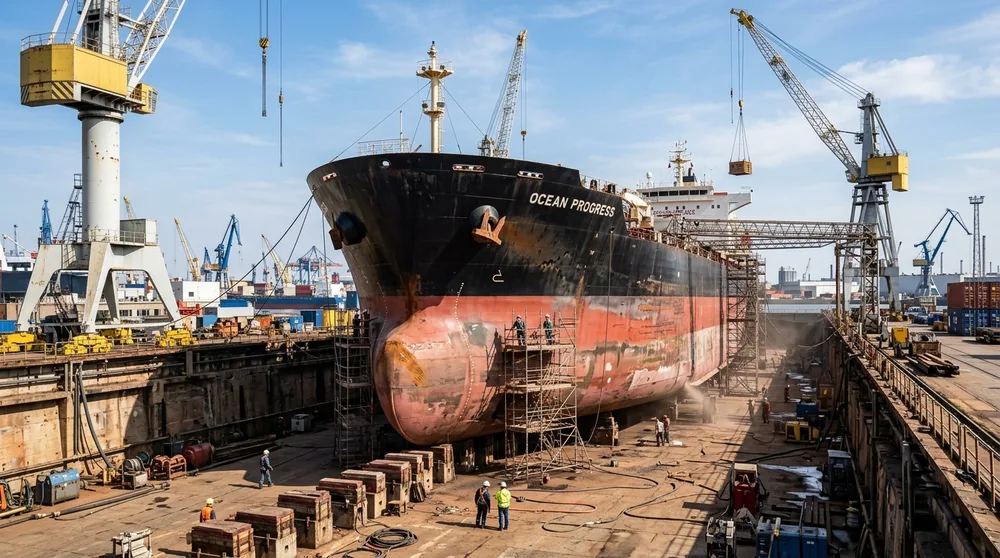
We analyze best practices, technologies, and workflows to optimize shipyard drydockings, ensuring safety, quality, and operational continuity.
The Critical Factor of Time in Drydock Interventions
In the maritime sector, every single day a vessel remains immobilized in a shipyard drydock incurs direct financial costs for shipowners and places the supply chain under pressure.
The success of a scheduled drydock overhaul depends up to 80% on preliminary engineering surveys, material procurement, and prefabrication before the vessel enters the dock. The allocated window demands specialized crews working in synchronized shifts under rigorous safety directives.
Close coordination among classification society surveyors, vessel crew, and contractor piping, boilermaking, and mechanical teams is essential to certify each project milestone without friction.
Key Operational Takeaways
- Comprehensive ultrasonic thickness gauging and deformation mapping prior to cutting.
- Advance procurement of critical spares and certified EN 10204 3.1 / 3.2 steel plates.
- Detailed rigging, shoring, and forced ventilation plans for confined spaces.
Safety Protocols in Confined Spaces and Hot Works
Ballast tanks, double bottoms, and machinery spaces concentrate the highest operational hazards during naval repairs.
Before authorizing any flame cutting or welding in areas adjacent to fuel bunkers or in enclosed voids, a certified gas-free clearance issued by an accredited chemist is non-negotiable.
Continuous atmospheric monitoring (oxygen concentration, LEL, and toxic gas levels) with calibrated multi-gas instruments must be maintained throughout the shift, supported by dedicated safety lookouts stationed at manholes.
Documentary Traceability and Quality Assurance
The final handover of a naval intervention requires a comprehensive quality dossier: qualified welding procedures (WPS/PQR), welder performance qualifications according to ISO/ASME, non-destructive testing reports (dye penetrant, magnetic particle, or radiography), and hydrostatic pressure test logs.
This documentary rigor ensures shipowners clear classification surveys without reservations and return the vessel to commercial service with full seaworthiness warranties.